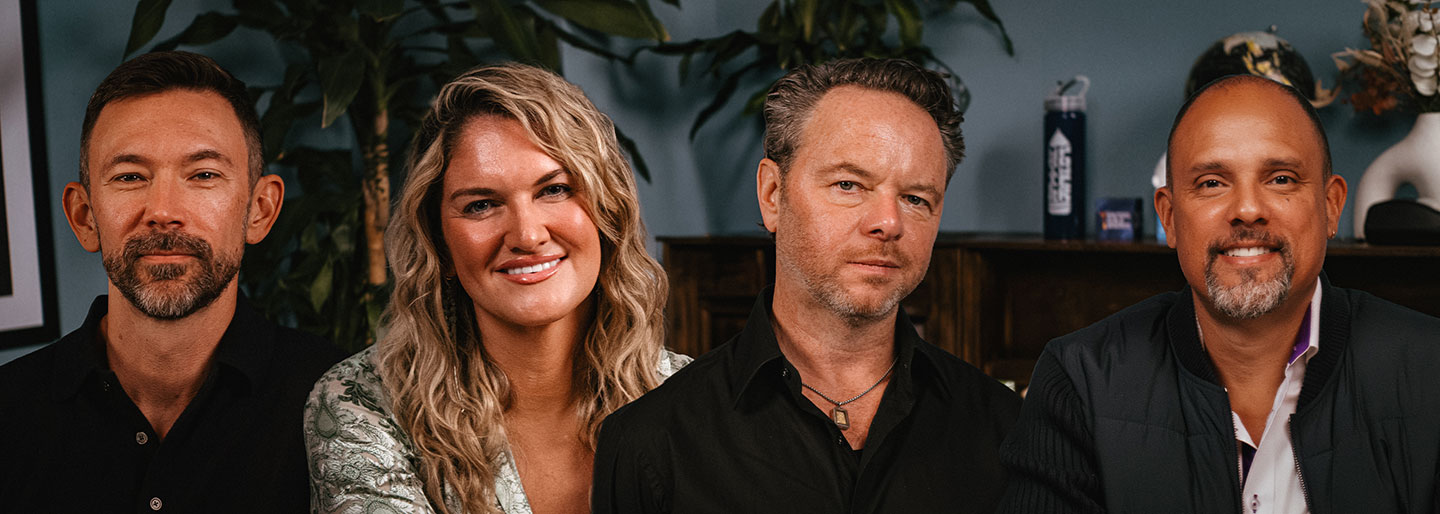
In 2025, multiple WGAW members went behind the mic during sessions at the 3rd & Fairfax podcast for discussions about career, craft, inspiration, and an assortment of other topics. Several of the showrunners also dropped some pearls of wisdom.
Written by listened in and mined some of the choicest tips. Below you’ll hear from some of our 2025 guests. Watch the episodes below and visit our YouTube channel to hear more.
Find Your Fluency – Ben Watkins (Cross)
“I tell younger writers, ‘Know what languages you’re fluent in when you go into meetings and you know what the content is about.’ Let’s say you’re staffing, you know what the show is about and you have a sense of what you could bring. You need to make sure they know what you’re fluent in, and that is based in your life experience. How were you brought up?
I was brought up in a single parent household. I had a white mom. We grew up mostly in the hood. That is a unique language. I was homeless at a time. That’s an experience that not a lot of people have had. I am fluent in what that is. Then my life turned around, I end up at one of the most prestigious universities in the world and at UC Berkeley. Now I’m fluent in a new language. I’ve worked probably 100 jobs…Each of those jobs is a different language.”
Respect the Ladder – Carina Adly MacKenzie (We Were Liars)
“The thing that I always tell people [whose] foot is in the door… one is it’s not a race. I actually think I was made a showrunner too early…Just because you’re really good alone in a room with your dog and a computer doesn’t necessarily mean that you should be in charge of a bajillion dollars and 300 people’s emotional and physical well-being. You learn really fast, but I think the ladder is there for a reason, and not trying to jump rungs or definitely not stepping on people on the way up is important.
The other thing is, take care of your assistants. Look around. Make sure that people are being treated fairly. It is really easy as a showrunner to have no idea what your assistant gets paid…Make sure that the people at the bottom are protected. It will filter through and everybody will be happy to come to work, which will make your life easier.”
Just Go Be You – Craig Mazin (The Last of Us)
“Don't take advice on what you should do…Werner Herzog did what Werner Herzog needed to do, and boy did he nail it! That is not what I needed to do. We are all different. We all have our fingerprint, and the most important thing if you're starting out, whether you’re trying to get into video games or writing for television or movies, is know who you are and know what you can do that is different from everybody else. Because if you’re just trying to do what we do, we’re already doing it. We got that covered. So just you go be you and you’ll be fine.”
Check Your Ego – Jason Keller (Stick)
“I’ve interviewed a lot of writers, and I wanted to meet talented, interesting writers who I knew that I could engage at a level that both of us felt safe enough to share ideas and not feel pressured or judged. And I think to be enabled to do that, you have to have your ego in check. If I’m hiring a writer and somebody comes in, and I sense somebody who is defensive or who is unwilling to talk about an idea that maybe isn’t working, that’s concerning for me. So that’s the sense that you want to give to somebody who you might be working for is, ‘Hey, I’m a collaborator, and I’m here to work with you and find something great together.’ That’s a really important quality to convey.”
Rewrites Are Inevitable – Noah Hawley (Alien: Earth)
“I was a staff writer on Bones, and the best thing that [creator/EP/showrunner] Hart Hanson ever said to me was that I was a pleasure to rewrite. Because that’s my job as a staff writer, is to give you, the showrunner, the best version of the script that I can, that works structurally, that is well thought through on a character level. But it’s your show. It’s your voice. You’re going to rewrite me. I don’t know of a lot of instances where writers’ scripts make it to the screen untouched.”
Learn to Delegate – Andy Parker (Boots)
“Part of the education in showrunning is learning that you have to delegate. You have to give up. You have to cede some territory and some responsibility to other people. And trust. Trust that you’ve hired the right people, trust that they’ve listened to what you’ve been saying and what’s important to you.”