

Despite challenges, labor struggle narratives break through.
10/16/2026 • Evan Henerson
A “Revolution Nerd” Honors Dolores Huerta
Guild member Eliana Pipes pays tribute to a labor legend.
How do writers depict worker power?
Answer: with equal parts conviction and a healthy dose of caution.
As anybody who has followed the weekly goings-on of a hospital, newspaper, law enforcement agency, public school or other public sector employer can tell you, workplaces have long been choice settings for action. And within any institutionalized workplace, there is often the potential for a storyline to focus on worker unrest. Film and TV has had plenty of storylines—primary or a subplot—of a group of people leading a protest, walking off the job or trying to form a union.
But nearly 50 years after Sally Field’s title character famously held up her sign reading “Union!” in 1979’s Norma Rae, WGAW writers still say that efforts to put labor on screen accurately can be challenging.
Written by spoke to several members who have written labor-themed stories both before and after 2023, on series ranging from comedies to science fiction to animation. Inspired by their own experiences as union members, several of the writers felt committed not only to put a labor story arc on screen, but to do so with as much accuracy as possible.
“Let’s be out!”

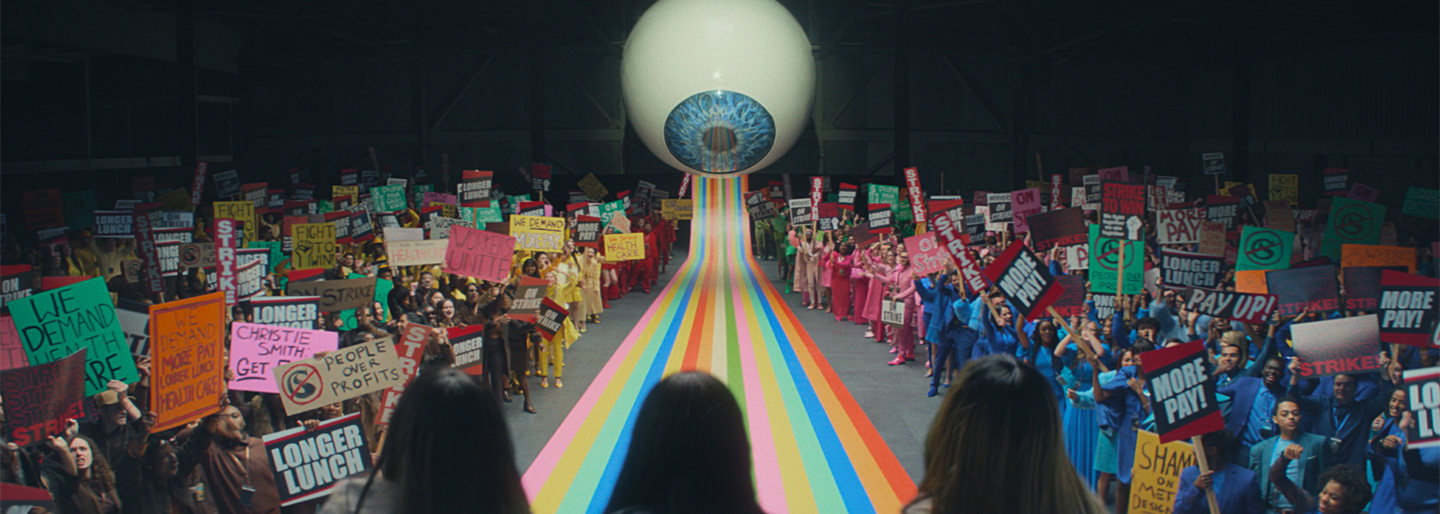
Compelling stories are all well and good, but in making his movies, organizer-turned-writer-director Boots Riley also wants his movies to light a fire under viewers, inspiring audience members to get organized and join a movement.
“I want to see a world in which the people democratically control the wealth we create with our labor,” Riley said. “I don’t want to just feel like that’s what I want because that’s morally superior. No, I’ve decided to dedicate my life to getting to that. So then the question is how do you ever get to something like that?”
In Riley’s case, that means weaving a tale like I Love Boosters that includes people with skin suits, a teleportation device that blasts people and goods between the Bay Area and Chinese factories, ransoming off stolen clothing in exchange for more humane working conditions, and a bonkers two-minute monologue on the meaning of dialectical materialism.
“We kind of played with the tropes of ‘Here’s the hidden conspiracy and all of that, but in the end, all of that shit doesn’t matter because they can just shut shit down,’” Riley said. “With this one, I also wanted to talk about the connection to a larger, a more radical vision. At the end, what we see is not a mass protest, it’s workers all over the world striking. So it’s like a precursor to changing the whole way that the society is organized, a precursor to revolution.”
Riley views his films I Love Boosters, Sorry to Bother You, and I’m a Virgo as tools which professional organizers can use to help people sign up for unions. He recounts hearing from an organizer in Baltimore who asked for a show of hands from workers interested in unionizing a 60-member unit. Somebody in the crowd yelled out “Eqisapiens, let’s be out!” the rallying cry from Sorry to Bother You. Then everybody raised their hand to join.
That’s not an isolated incident, says Riley.
“During the big strike wave of 2020 through 2024, I got so many messages from organizers who said some version of, ‘We didn’t know if people were going to be down for this strike or this work stoppage or to this join this union we were starting,’” he said. “Then we showed them Sorry to Bother You and then everybody voted to do this thing.”
The Abbott SEPTA Strike Hits Home
“Discussions of the 2023 strike definitely came up in the room while talking about the episode,” said Riley Dufurenna whose episode of Abbott Elementary took place against the backdrop of a transit worker strike. “It helped influence certain elements of the story since it was relatively fresh and we had all just lived a similar experience. Such as the impact strikes have on communities, what would constitute scabbing in this case, and even down to picket line chants.”

These really are stories about the more basic concepts of fairness and about power and about how we make ourselves heard over the agendas and the mission of the stakeholders.
- Andrew Black
When he was writing the “Strike!” episode in which the Abbott teachers scrambled to get their students to school in the midst of a Southeastern Pennsylvania Transportation Authority (SEPTA) strike, Dufurrena knew he had a writers’ room that would be receptive. Series creator and EP Quinta Brunson had spoken in the past about real-life SEPTA bus drivers often settling for an unfair contract rather than depriving the kids. How would things play out, she wondered, if those workers actually walked off the job? Although Janine, Melissa, and the other pro-labor Abbott teachers might have been annoyed at the inconvenience, Dufurrena noted that none of them faulted the SEPTA workers for trying to get a fair deal.
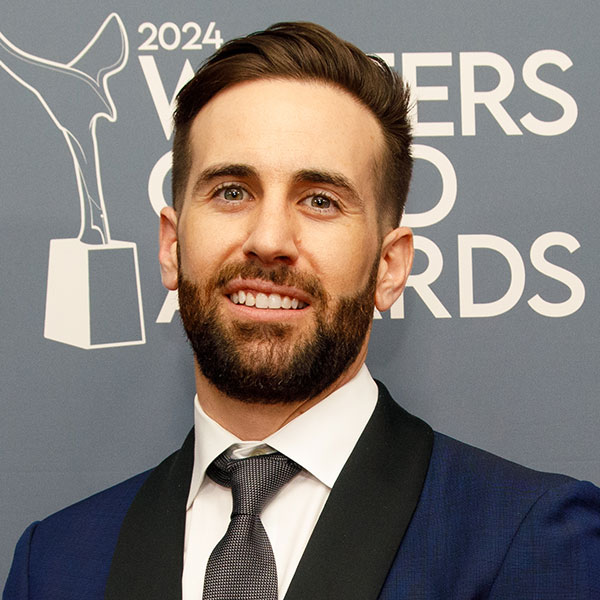
As the beneficiary of union protection both before and after he became a WGAW member, Dufurrena was delighted to write the “Strike” storyline.
“When I moved out here, I was a PA on a show where I was the employee of that studio. They had to provide healthcare access and even 401K,” Dufurenna said over email. “It was the following year on the show where they decided to outsource us assistants to a payroll company so they could save on pension and health insurance. This made it feel impossible to afford LA rent, groceries, health insurance (forget about retirement) while being paid such a low wage.”
By the final season in 2017 he was the show’s writer’s assistant still with outsourced payroll through Cast & Crew. At the end of 2017, Local 871 added writer’s assistants and script coordinators to be members effective January 1, 2018. After that, he became a script coordinator for the show’s spinoff pilot before starting as a script coordinator on Abbott.
“This led to higher hourly pay, access to pension and healthcare and a body of people hungry to get things done,” he said. “This was my first experience with organized labor, and I quickly understood the importance of it.”
Cloud 9 Fights On
Set in a big box retail store like Walmart or Target, the comedy Superstore (which ran from 2015-21) featured multiple pro-worker stories including a season 2 arc that saw several of its non-unionized workers in the fictionalized Cloud 9 walking off the job in protest of a firing. After she joined the series as a staff writer and then story editor, L.E. Correia wrote the Season 5 episode “Negotiations,” in which several of the same Cloud 9 employees push ahead with a long-desired unionizing effort, reaching a deal at the negotiating table only to learn after that Cloud 9 had been bought out by another corporation thereby nullifying the contract.
Correia acknowledged that for dramatic purposes, she had to take some creative liberties in depicting the negotiation session and fast track elements of the process. “I’m proud of the episode,” Correia said, “but I’m sure some of the labor organizers I got in touch with, if they watched it, would say ‘That’s not how it really works.’”
The episode’s resolution, Correia said, while deflating from a labor perspective nevertheless served multiple functions.
“For storytelling reasons, we didn’t want to be doing union storylines forever, but it also felt to me—and I think to other people in the room—like a realistic portrayal of how these things sometimes end,” Correia said. “It’s a balance where it wasn’t intended to be a bummer, but the truth is that working in labor is a struggle that’s never really over even if you win the contract.”
Striking On Mars
The happenstance of timing played into the airing of “Crossing the Line,” the labor-themed episode Andrew Black wrote for the fourth season of the Apple sci-fi series For All Mankind. Series creators Ben Nedivi, Matt Wolport and Ronald D. Moore were interested in a labor arc exploring the class divide on Mars Happy Valley colony and what would happen if the blue-collar workers on the colony staged a labor strike that threatened the colony’s ability to mine an asteroid.
Black completed the episode in the late summer of 2022, but “Crossing the Line” aired in December 2023, after the end of the WGA and SAG-AFTRA strikes.
“These really are stories about the more basic concepts of fairness and about power and about how we make ourselves heard over the agendas and the mission of the stakeholders,” Black said. “The attraction of doing this sort of story is looking at the finely-oiled machine of your workplace that your main characters know each other in and operate in, and seeing what happens when people walk away.”
Unions…D’Oh!
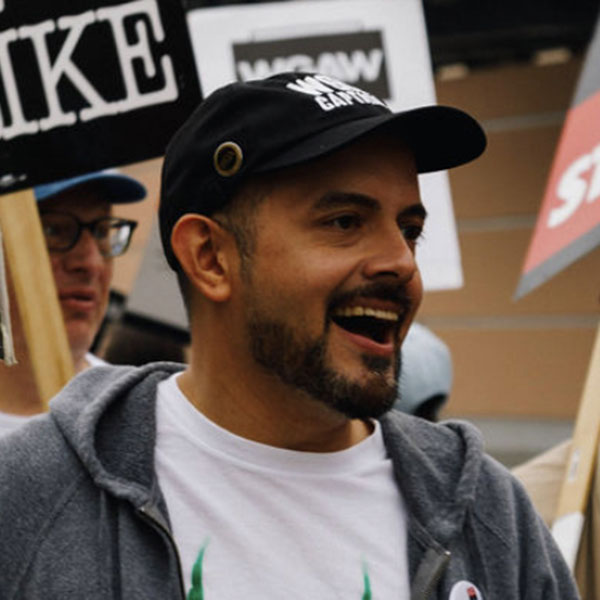
Over the course of its 37 seasons, The Simpsons has tapped into labor actions on more than one occasion. WGAW member and captain Cesar Mazariegos was well aware that the Season 4 episode “Last Exit to Springfield” in which Homer Simpson becomes the unlikely leader of his union at the Springfield nuclear power plant was one of the venerable series’ most memed episodes.
Still rankling over the passage of Prop 22 which labeled California drivers independent contractors instead of employees, Mazariegos found his inspiration for his season 35 episode.
“For me, it just felt so obvious that Uber and Lyft and delivery companies had thrown so much money at making these fake commercials,” said Mazariegos who is a co-EP on The Simpsons. “Really Prop 22 was just a super well-funded union-busting effort. It was so upsetting, and basically I thought we haven’t done a union episode in a really long time.”
After consulting with his wife who works with worker justice programs, Mazariegos hit on the idea of Marge Simpson taking a job at a ghost kitchen—a preparation space with no storefront where cooks prepare food for takeout and delivery orders only—and starting a union after she realizes how the business exploits its workers.
In addition to stacking the episode had its share of jokes, Mazariegos took pains to make sure his episode “Night of the Living Wage” had an educational component as well. He has since heard from teachers who use the episode in their classes. The episode has also earned Emmy, Writers Guild Award, and Humanitas Prize nominations.
“We don’t often tell stories about working class people, people who are struggling,” Mazariegos said. “If you have a show about the family that altogether probably makes $65K a year…that’s not really where we base our shows on unfortunately, and that’s who tends to be trying to start unions.”