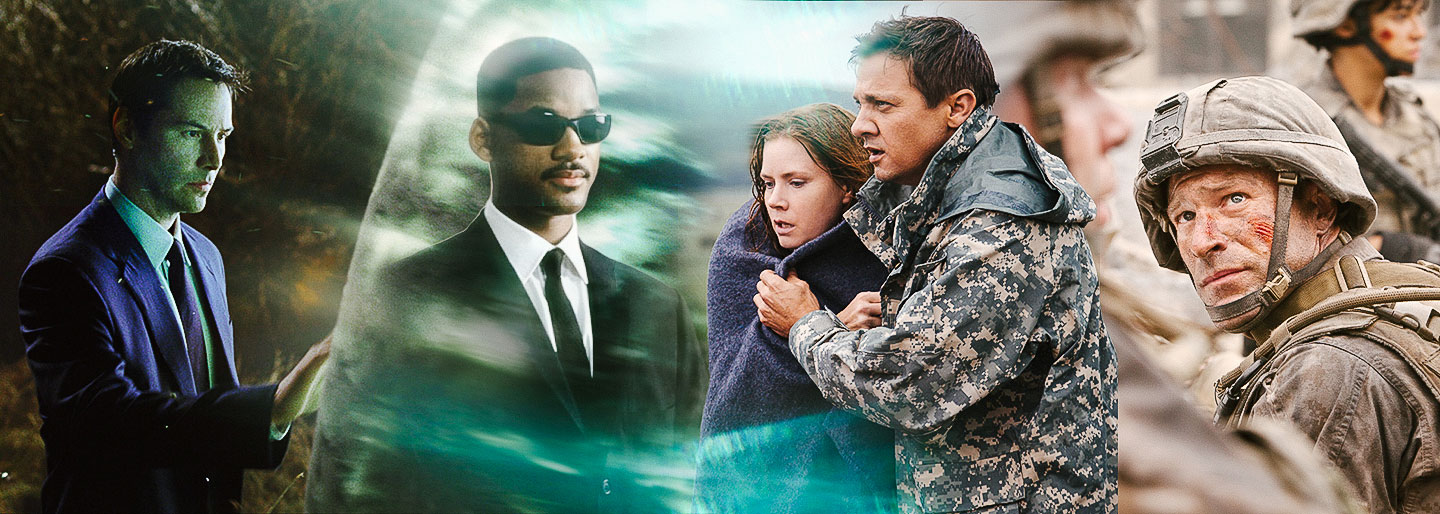
Ever since Georges Méliès took A Trip to the Moon in 1902, writers have been grappling with creatures from different galaxies. Alan B. McElroy, a science-fiction loving screen and TV writer currently working as an executive producer on Star Trek: Strange New Worlds, believes these tales begin by answering the fundamental question: What would an alien want? “One of the things you see in a movie like Predator, and why that movie stands up, is because the predator’s motivations are something we understand,” McElroy said. “It’s a hunter. That’s why it came here: to hunt.”
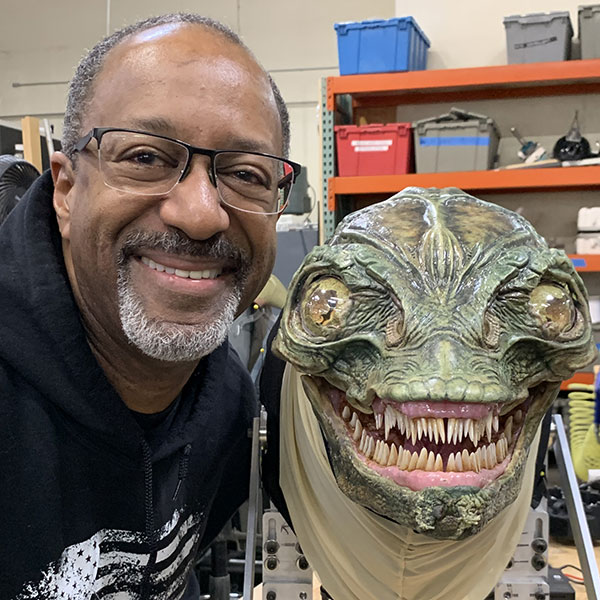 Star Trek: Strange New Worlds writer Alan B. McElroy.
In some cases, a single being comes to earth as a peaceful explorer; in other instances, wave upon wave descends on our planet bent on full-scale destruction. Sometimes we learn that other-worldly visitors have actually lived among us for centuries, but we didn’t realize it, or a government agency has been actively working to suppress that knowledge.
Do these storylines sound familiar? They should. “We’re telling the same story over and over again,” admitted David Scarpa, who wrote the screenplay for the 2008 remake of The Day the Earth Stood Still. “So it’s a question of what has somebody brought that can add something new?”
In remaking a classic—1951’s The Day the Earth Stood Still written by Edmund H. North, based on a story by Henry Bates—what was new for Scarpa was shifting the tale of an alien visiting earth to warn mankind of their destruction from the 1950s to the 2000s.
“It’s such a classic myth, the idea the aliens have come to bring us a message, it’s almost Judeo-Christian, the idea of this divine being that somehow has knowledge that we don’t have has come to deliver a prophecy,” Scarpa said. “What was interesting about it was the idea of seeing ourselves reflected through the eyes of an alien civilization. Are they rendering judgment on us? Do they view us as a failed experiment? And the idea that their judgment of us may hang in the balance. This was sort of the beginning of a point where global warming and climate change and all that were coming into the consciousness.”
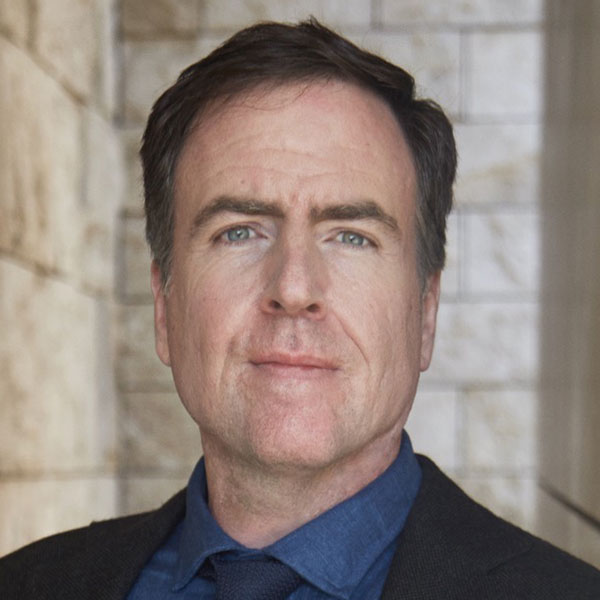 The Day the Earth Stood Still (2008) screenwriter David Scarpa. Photo by Alex Hoerner.
The writers interviewed for this story ranged from those who have worked steadily in the science-fiction genre to others whose alien stories was a one-off. Some of the most successful first-contact stories, several argued, have been reflections of the time periods in which they were made and looked to make a greater point about human behavior.
“Writers are always looking for ways to reexamine the human condition and put our identity not on trial but on examination through another lens,” McElroy said. “Aliens allow us to do that.”
The spectrum of alien movies is vast, with some titles being referenced repeatedly. Independence Day (Screenplay by Dean Devlin & Roland Emmerich) turns 30 this year. Contact and Men in Black will celebrate their 30th anniversaries in 2027. This summer, Disclosure Day (with a screenplay by David Koepp from a story by Steven Spielberg) arrives 49 years after the release of Spielberg’s Close Encounters of the Third Kind, with films he directed charting the visits of other-worldly beings both friendly (E.T. the Extra-Terrestrial) and hostile (War of the Worlds) along the way.
Eric Heisserer, who adapted Ted Chiang’s “Story of Your Life” for the Writers Guild Award-winning 2016 film Arrival, cites Close Encounters as one of the films that sparked his interest in pursuing screenwriting as a profession. Along with 1997’s Contact, Heisserer said, Close Encounters helped develop “a special place in my heart for first-contact stories.”
“It was something that spoke to me at the time in my life when I was so curious about the parts of the world that were unexplained to me as a child,” Heisserer said of Close Encounters, “and I understood in my bones that Richard Dreyfuss’s character would be so compelled to step into that ship at the end of the movie, that his need to know outshone whatever earthly commitments he had made.”
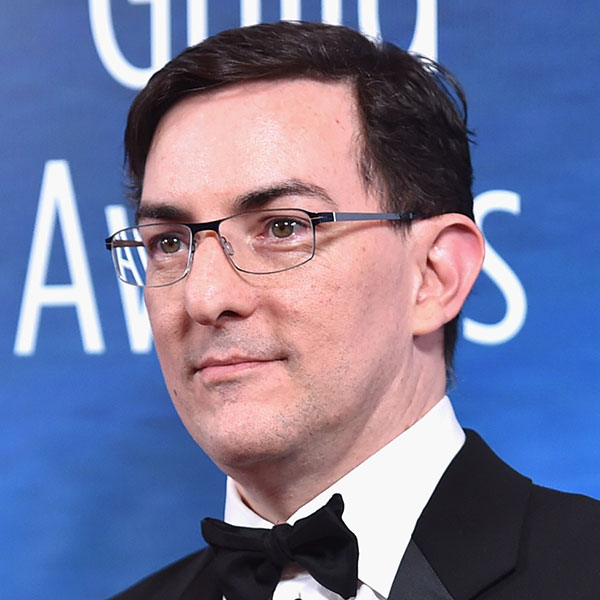 Arrival screenwriter Eric Heisserer. Photo by Charley Gallay/Getty Images.
“I found it such a brave thing to do in that movie,” he continued, “and that that is the kind of burning question that I think writers and storytellers have in them.”
The peaceful heptapods of Arrival are so foreign that the government enlists a professor of linguistics to figure out what they want. Louise, the film’s heroine, does her job so well that she is able to not only prevent warfare, but also acquire knowledge and ultimately make a heartbreaking choice in her own life.
While potential producers may have balked at the pitch of “a non-franchised science-fiction story with a female lead about linguistic relativity,” it was the role of communication within Chiang’s story that resonated with Heisserer.
“I felt Ted was shining a light on the fact that the act of communicating or attempting to communicate with somebody who doesn’t know your language is almost by default an act of empathy,” he said, “that you are demonstrating you care enough about them that you want their thoughts or feelings on things, that you’re trying to build a bridge to reach them.”
Migizi Pensoneau also cited the language-bridging theme of Arrival as a feature that the genre doesn’t often contain. An indigenous writer from Northern Minnesota, Pensoneau said he could particularly relate since his culture’s Ojibwe language is not a gendered language and is often conjugated based on whether an object is animate or inanimate.
“Arrival changed the game in a really interesting way because that was sort of the first one where I thought, Oh, you are really understanding the way that a different species or culture thinks and observes the world,” Pensoneau said. “There’s a lot of that when you’re talking about different cultures and languages here on earth.”

Writers are always looking for ways to reexamine the human condition and put our identity not on trial but on examination through another lens. Aliens allow us to do that.
- Alan B. McElroy
Growing up as a self-confessed sci-fi nerd, Pensoneau binged every alien and creature story he could find. When he joined Alien: Earth as a co-EP and on-set writer during the series’ first season, he spent a lot of time considering the behaviors, origins and interactions of the creatures created by show creator Noah Hawley. Pensoneau recalls a meeting discussing the viscosity of the slime that the fly creature would secrete.
After nine Alien films, audiences are long familiar with the titular xenomorph. But with several new species unleashed on our planet in Alien: Earth, Pensoneau started thinking about larger questions of behavior, adaptability and, of course, the threat they pose to humanity.
 Alien: Earth writer Migizi Pensoneau. Photo by Mercedes Zapata.
“There’s not a lot of benevolence there,” Pensoneau said, “just creatures trying to live and survive and thrive, and that’s often at the expense of other creatures. You think of them like you think of characters you have in your head. You think of how they interacted with their own world and how easy or difficult it is for them to interact with our world. And for this particular franchise, a lot of this is about how much can you unnerve the audience.”
Thirty years ago, when they were gearing up for Independence Day, screenwriters Dean Devlin and Roland Emmerich crafted their alien invasion picture as a disaster movie that would contain familiar tropes of the genre and hopefully create others for films still to come.
Having recently completed Stargate with Emmerich, and figuring he had nothing new to contribute to the genre, Devlin passed on the idea of Independence Day multiple times before Emmerich offered an image that sealed the deal for his writing partner: imagine waking up in the morning, going outside and not being able to see the sky because it was entirely covered up by a spacecraft.
“We had seen space ships arriving, but never one that was 15 miles long and covered an entire city and bathed everything in shadow,” Devlin said. “At the same time, we didn’t want to pretend like we had invented the alien movie, so we very intentionally tipped our hats to images you’ve seen in other movies, to suggest that the we’re all connected somehow.”
 Independence Day co-screenwriter Dean Devlin. Photo by Electric Entertainment.
Devlin harkens back to a compliment he received for the film from screenwriter William Goldman who, amidst all of the mayhem, found himself moved by the actions of the human characters—a father sacrificing his life to save the planet, a son hearing for the first time that his father is proud of him.
“The thing he said that really stuck with me and is the thing I’m proudest of is he said, ‘I went to see a movie I thought was about aliens, and I realized I was watching a movie that was all about love,’” Devlin said. “That’s the thing that separated it, and that’s why it still survives today.”
As its title indicates, 2011’s Battle: Los Angeles takes the genre into warfare, viewing an alien invasion through the eyes of a U.S. Marine Corps rifle team. Christopher Bertolini, who wrote the screenplay as a spec script, refused to set any scenes in the Pentagon or the White House. The city, country or world might be under attack, but the action would never leave the trenches.
“When I first wrote the script, page one was basically the invasion and on page two or three, this marine unit was flying into Los Angeles,” Bertolini said. “This one definitely had an eye towards trying to be a realistic military movie, just kind of seeing everything through the eyes of these Marines on the ground.”
In the first Men in Black, Ed Solomon (who is credited with screen story and screenplay) played around with the evil alien trope, envisioning the “villain” of the story to be not the ETs, but mankind. A giant alien bug was coming to wipe out the pestilent virus that had contaminated the planet.
 Men in Black screenwriter Ed Solomon. Photo by Olivier Vigerie.
“That virus just turned out to be humans,” said Solomon. “That was deemed a little too philosophical and perhaps maybe a little too negative. Instead, they wanted a finale with two guys with big guns and a really mean old alien.”
When he joins the Men in Black, Will Smith’s Agent J comes to learn that aliens have been living on our planet for centuries, doing their work while in disguise as humans or animals. Despite the still-heady idea that the MIBs were protecting humanity and keeping them ignorant because we as a group are “dumb, panicky, dangerous animals,” Solomon turned the story into a comedy about the folly of humans thinking they were the center of the universe.
“The idea for me there was that earth was a way station, that it was literally that unimportant, essentially a parking lot, a temporary space for aliens to just stop when they were going between actually significant planets,” Solomon said. “I was also sort of thinking about America’s basic xenophobia a little bit, but mostly I was just trying to write a fun comedy.”