

WGAW writers continue to step up to support the fund that helps the industry.
9/9/2026 • Evan Henerson
How to Put Words in Conan’s Mouth
Awards show writers share craft advice and tips for members looking to break into the genre.

WGAW writers continue to step up to support the fund that helps the industry.
Even in times of relative calm, the work of the Entertainment Community Fund (ECF) never stops or even slows down.
Spring of 2026 saw the nonprofit distribute the last of its $1.5 million in relief directly targeting WGAW members who had been affected by the 2025 wildfires in Pacific Palisades and Altadena. In collaboration with 17 other unions and associations, the WGA and the ECF also co-sponsored a series of fire-relief-related webinars on topics including FEMA, disaster unemployment and small business loans.
According to ECF Western Region Executive Director Keith McNutt, Fund officials are in a final fundraising push to complete the Hollywood Arts Collective’s (HAC) Rita Moreno Arts Building by the end of the year. The HAC is working to provide affordable two- and three-bedroom apartments for arts and entertainment professionals in Hollywood and West Hollywood with five additional housing projects scheduled to break ground in the next 10 years. A plaque in the garden of the HAC’s existing Cicely Tyson Building acknowledges the WGAW’s contributions.
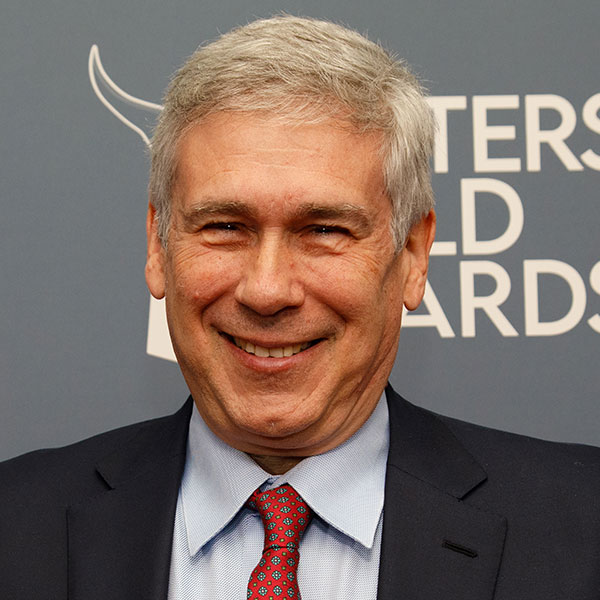 Former WGAW President and ECF Vice Chair Chris Keyser. Photo by Brittany Woodside.
Disaster relief and housing are only part of the Fund’s offering. The ECF also provides targeted assistance, relief and social services to all sectors of the industry—above and below the line. Actors, directors, musicians, and crew members are all eligible for ECF programs and services.
The same applies, of course, to Writers Guild members who have historically been among the Fund’s most steady supporters. The ECF’s Western Council and its Board of Trustees include several WGAW members including Western Council Chair David Rambo and WGAW President Michele Mulroney, who joined the Board of Trustees in June. Also in June, longtime ECF Board member and former WGAW President Chris Keyser was appointed vice chair of the Fund, second to Chair Annette Bening.
Keyser’s involvement with the Fund began during his time as Guild president in 2011. In the years after his service to the Guild, Keyser’s work with the Fund has increased and deepened. He currently chairs the strategic planning committee and has co-chaired the Fund’s capital campaign.
“I’ve seen more and more what the Fund accomplishes and what the need is,” Keyser said during a recent interview with Written by. “It’s easy to do that from inside the WGA or even just as a writer in the community.”
Disaster and crisis relief often gets the headlines for charities and nonprofits, but even without the urgency caused by a pandemic, industry-wide work stoppage or other natural disaster, Keyser and other WGAW members who have long championed the work of the ECF acknowledge that the needs of the Fund, and of those it serves, are as critical as ever.

If a writer in our community is facing a challenge, whether it’s an economic or an emotional challenge or a challenge in navigating a particularly difficult career move, they need to be aware that the Fund is there for them.
- Chris Keyser
Just as the WGAW works to help its members’ prosperous years allow them to weather more difficult times, Keyser says the ECF is focused on helping when times are difficult.
“Any writer knows that the course of a life in the arts is a difficult one with the economic ups and downs that we face,” said Keyser. “What we need to talk to people about is the need to support the Fund on ordinary days. Because we’re there for writers and for everybody in the arts and entertainment on days when the problems we face are not global or national, but they’re personal.”
Those needs could include being unemployed or underemployed, struggling with mental health issues, navigating health insurance or facing a challenge related to housing. Between the effects of industry contraction and changes to the public social safety net, millions of people have been affected.
“If you need something, ask for it,” he said. “If a writer in our community is facing a challenge, whether it’s an economic or an emotional challenge or a challenge in navigating a particularly difficult career move, they need to be aware that the Fund is there for them.”
 WGAW member Danita Jones.
Other ECF offerings are designed to open up new career options. McNutt highlights the Fund’s Teaching Artist Program, a new round of which is gearing up for the fall. Produced in partnership with Sony Pictures Entertainment, the program trains professionals from across the entertainment industry to become teachers. The five-week intensive is designed to help artists of all disciplines develop the skills they need to be able to teach in classrooms or other community settings.
“A key part of this program fits into our mission of helping people in entertainment find rewarding parallel careers that help them sustain themselves,” said McNutt. “Because as we all know, income in entertainment is not always regular, so one of the ways we help people build a more stable financial life in the arts is by developing parallel careers that they also love.”
“We would love to have more writers involved,” he added. “It’s such an important thing to help kids find their voice, to have talented writers teaching them.”
WGAW member Danita Jones not only found that the ECF’s Teaching Artist Program would help her develop students’ voices, but also used the program to develop a passion project. Jones, a 28-year Guild member and former vice chair of the Committee of Black Writers, developed her Living History program, a multigrade curriculum designed to get students to connect events of 1877 to the present day. Through the Teaching Artist Program, she tested Living History at Harvard-Westlake School in Studio City.
“Going through that experience, along with receiving so much encouragement from the amazing team running the program, gave me even more confidence to step into the classroom at Chapman University that spring,” Jones said. “It was my first time teaching, and I still use many of the things I learned through the Teaching Artist Program when I teach today.”
Jones is producing on a Peacock series, but doesn’t know what her next gig will be and admits that a seven-month period of being unemployed last year was challenging.
“So many people I know have gotten out of the industry because they haven’t worked for two years. It’s been a really dire situation,” she said. “That’s another reason I decided to go ahead with my Living History. I want to have something in place to be able to reach out to schools, museums and other organizations.”
In continuing to boost awareness of the ECF, Keyser encourages people to remember that the Fund exists to help. He also emphasized that those who are in a position to help the Fund do its work should consider donating.
“I like to think of this as a kind of self-insurance,” Keyser said. “Those of us who have long careers have times when we can help others and we may end up helping ourselves down the line by doing that. So we need both people to give and to take increasingly. That’s the ongoing job of the Fund and of any charitable organization. So we’re there to meet that challenge.”