

Awards show writers share craft advice and tips for members looking to break into the genre.
1/23/2026 • Evan Henerson
Writers Guild Awards : His Name is Reo and He Can Spin a Tale
2026 TV Laurel Award Honoree Don Reo reflects on his career.

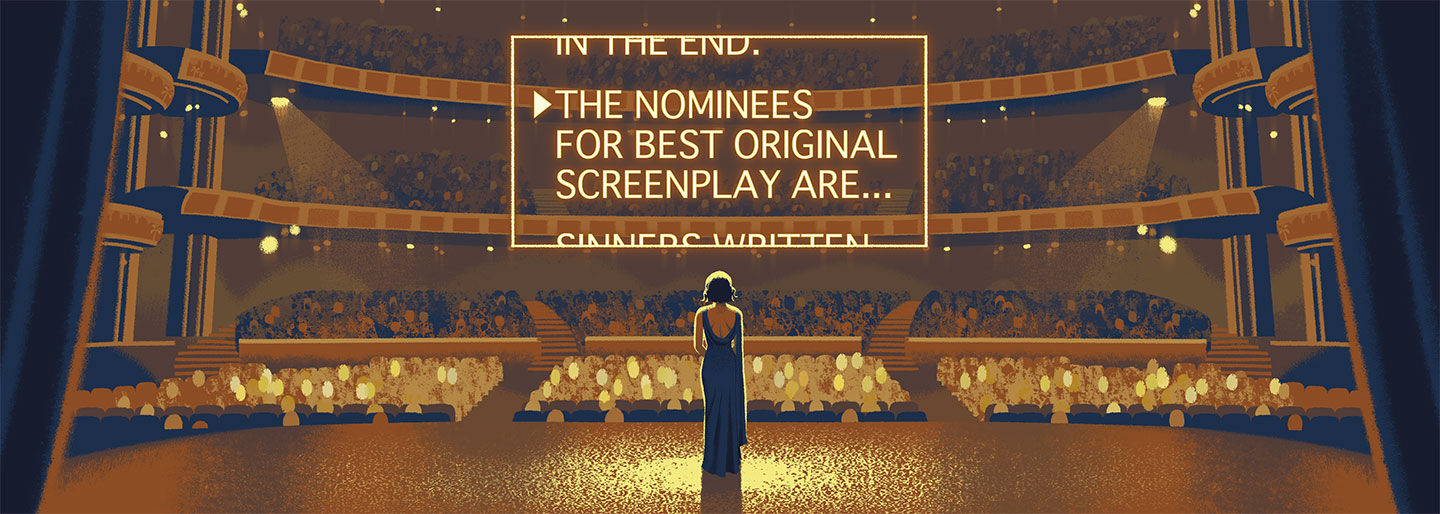
Awards show writers share craft advice and tips for members looking to break into the genre.
Flexibility, versatility, being good (and fast!) with a joke, and the ability to research and write for a bunch of real-life “characters” that you did not create—these are some of the attributes that WGAW members say have served them well when writing awards shows.
Annual programs such as the Oscars, Emmys, Golden Globes, Country Music Awards, Grammys, and many others are Guild-covered programs, and some of the writers for these shows have been putting jokes in the mouths of celebrated hosts and presenters for decades.
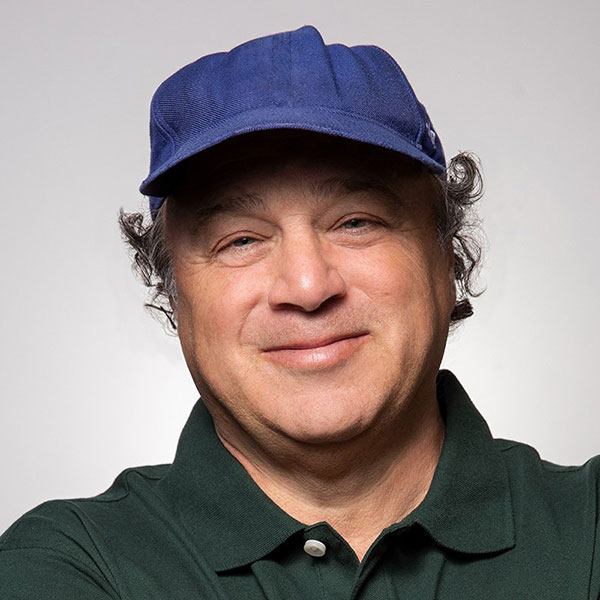 David Wild. Photo by Robyn Von Swank.
“It’s not like it’s ever been easy or that there’s a lot of opportunity,” said long-time awards show writer and WGAW member David Wild. “It’s like a little corner of show business that has attracted all sorts of interesting people. I would never have thought this would be my life.”
“I definitely like the challenge,” added Agathe Panaretos, who has written for multiple shows, including the Oscars, Emmys, and annual Kennedy Center Honors. “You’re serving so many different interests. There’s the talent themselves, the producers, the network, the governing body of whoever the awards are, the publicists for the talent. The challenge is trying to find a way to navigate all of that that everybody can be on board with.”
Written by spoke to several writers, some of whom were in the thick of the ramp-up to an upcoming 2026 show. Some have spent portions of their careers moving between other genres of writing. Others worked as actors or stand-up comedians before an awards show host or producer identified them as good fits for this type of comedy-variety writing.
In 2001, fellow member Ken Ehrlich tapped Wild—a music journalist for Rolling Stone at the time—to help write the Grammys. The call came on a Thursday for a show that was happening Sunday. As Wild recalled, there had been a shift in hosts, and he was asked to help craft the script that was being revised for Jon Stewart.
Around the same time, he was also asked to be the head writer for America: A Tribute to Heroes. The project earned a Peabody Award and an Emmy nomination for Wild and his fellow writers. He was subsequently on a panel at the Writers Guild Theater in which the assembled writers and producers—including Larry Wilmore, J.J. Abrams, and Shawn Ryan—were each asked about their greatest achievement of the year.
When it came time for Wild to share his highlight, he had an answer at the ready. “I said, ‘My greatest achievement is that I qualified for health benefits the day before this event,’’’ Wild recalled. “I went from never having written for TV to working on the Grammys and the America tribute. I was so new to it, but it ended up changing my life.”
Writer and actor Nefetari Spencer credits SNL alumni Leslie Jones with bringing her into awards writing. In 2017, Jones who was hosting the Black Entertainment Awards (BET), turned to her longtime friend and comedy colleague to help craft a sketch for the opening of the show.
“Remember when shows used to open with a big sketch at the top? Leslie knew I could pull that off,” Spencer said.
That same year, Spencer was asked to create a sketch for Tracee Ellis Ross for the American Music Awards.
“I understood exactly what they needed and the time frame they needed it, so they gave me the opportunity,” said Spencer who, several years later, earned the distinction of becoming the first woman to be head writer for the BETs and the first Black woman to be head writer for the AMAs.
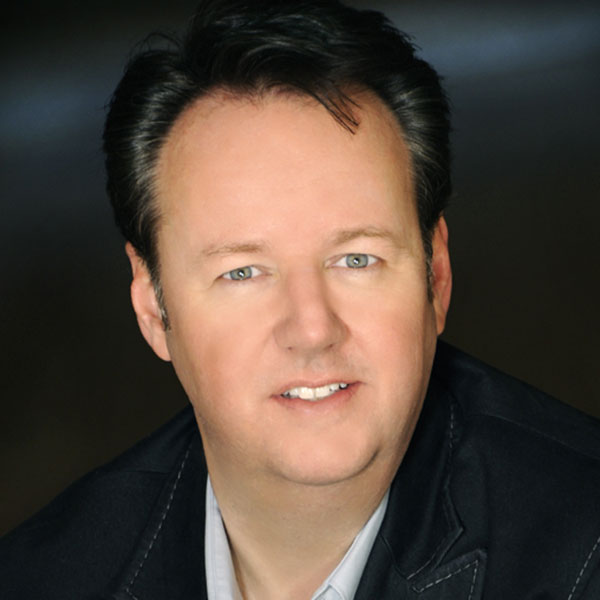 Dave Boone
Awards show regular Dave Boone developed his love of awards shows watching the Oscars and other awards shows as a kid. Seeing the likes of Johnny Carson and Bob Hope go through their hosting duties, Boone considered the Oscars “a pretty cool gig.” Boone spent a decade writing freelance jokes for people like Kevin Nealon and Jay Leno. In 1998, he got lucky when another long-time idol, Billy Crystal, asked him to join the writing staff of the 70th Academy Awards.
That was the year Titanic set the record for Oscar wins, and the year the program assembled 70 former Oscar winners for the telecast. Boone has a photo in which he is being hugged by Robin Williams, clutching his newly awarded Oscar for Good Will Hunting.
“In the 10 years that I knocked around between the time I first started writing jokes to the time I got hired, I was kind of honing my chops to be able to come up with jokes really fast and learning the craft,” continued Boone, whose credits include multiple years writing for the Oscars, Emmys, Tonys, and Writers Guild Awards. “Even on my first Oscars, I was learning from the best.”
Among the techniques he has learned over the course of nearly 40 years of writing for awards shows: the ability to generate lots of material quickly. Getting too attached to a single joke probably won’t work in your favor, according to Boone.
“Sometimes you’re rewriting one or two pieces constantly because you’re trying to chase something that nobody really knows exactly what it is they want,” Boone said. “It’s hard to hit a moving target sometimes. You adapt.”
Wild recalled an instance from his award show writing history that required quick adaptation—in 2012 pop superstar Whitney Houston died the day before the 54th Grammy Awards. A monologue that host LL Cool J had been assured was “locked and loaded” now had to be unlocked, unloaded, and hastily rewritten.
Wild sent his revised monolog to LL, who said he loved it, but that it needed one thing.

I’ve learned that the key is to write to other people’s voices, not force people into your voice, but to listen to what makes them good and then try to make them sound like the best version of themselves.
- David Wild
“I said, ‘What’s that?’ He said, ‘A prayer,’” said Wild. “In awards show writing, I hadn’t written a lot of prayers, but I said, ‘If you feel there needs to be a prayer, you write me what you’re thinking, and I’ll defile it with my lack of religious experience and make it something that we can say in prime time on network TV.’ That’s what happened, and it ended up being incredibly powerful, one of the greatest moments I’ve ever experienced.”
Having spent decades working on a range of shows including the Video Music Awards, the People’s Choice Awards and the Film Independent Spirit Awards, Steven Murphy considers himself, if not always an expert on the content of the shows, “kind of an expert on how these shows work.”
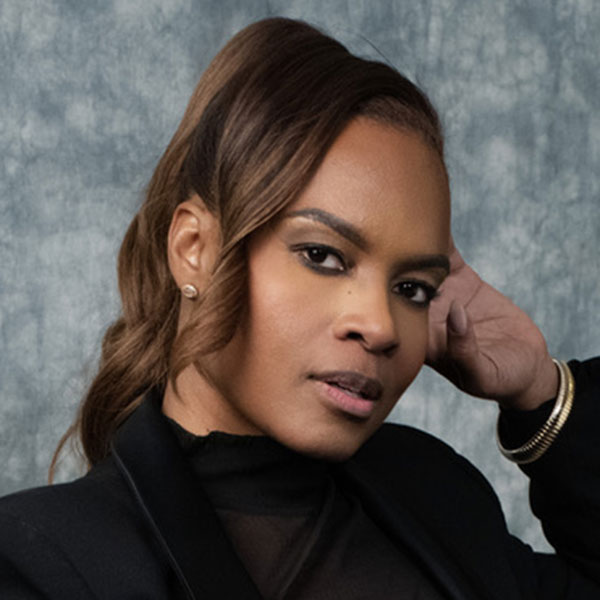 Nefetari Spencer. Photo by Cameron Thrower.
When he joined the team to work on the 2025 Writers Guild Awards, contributing to a show about writers was very much in his wheelhouse.
“It was like kind of like, ‘Finally this is a topic that is a natural fit,’ vs. having to dive in and learn a different kind of subculture or whatever the newest pop music is,” said Murphy who returned to work on the upcoming 2026 show. “Writing for the WGA, it’s like ‘Oh, yeah, I know that legendary writer. I love those shows that are nominated. I’m one of the ones who votes.’ It’s very much a sweet spot.”
As a longtime writer for The Onion, Panaretos was known for her ability to write comedy. Her first opportunity in awards show writing came when someone passed her name to the producers of the 2019 Emmys.
According to Panaretos, a successful awards show writer has the ability both to nail both a joke and hit a serious bit, potentially in the same show.
“They’re looking for writers who have that flexibility,” she said. “The Oscars is probably the biggest example. There have been shows where I have been able to pitch jokes for the monologue that have been very silly, and then I’ll also be the one working to write the In Memoriam tribute for someone who has lost a very specific person.”
Some additional tips for members looking to be successful at awards show writing:
Have plenty of jokes in your packet. And some less funny stuff, too.
“You want to have a different angle, an original voice. So strong joke writing is a good thing to have,” Boone said. “And also some serious pieces. Write an appreciation of a TV show or a movie or director or a star, so that you can show that you can write straight material in addition to the comedy material.”
Do your homework—Research the people for whom you will be writing.
“I’ve learned that the key is to write to other people’s voices, not force people into your voice,” said Wild, “but to listen to what makes them good and then try to make them sound like the best version of themselves.”
Watch awards shows. The entire show.
“Nowadays a lot of people watch clips of awards shows,” Panaretos said. “If you really want to be writing for this, you should watch the shows in full and see kind of how they run altogether and how all these different disparate pieces kind of fit together.”
“If you can get your hands on the transcripts of the shows or maybe some of the presenters’ patter, you’ll notice the format,” added Spencer. “It’s such a short form. I think late night writers get it because it’s kind of the same realm.”
Recognize that this is a collaborative medium.
“There are so many moving parts on these shows,” said Murphy. “I try to keep in mind that it’s not a show where it’s necessarily the writer’s vision that is the fuel of the shows in so far as there are so many other moving pieces. You really have to be attentive and collaborative and open to listening to different voices.”
1/23/2026 • Evan Henerson
2026 TV Laurel Award Honoree Don Reo reflects on his career.