

From Transparent to The Boroughs writer-musician Yona Speidel plays on.
9/18/2026 • Evan Henerson
What I Learned in TV Staff Writer Boot Camp
Alums reflect on valuable lessons from the popular, long-running WGAW program.
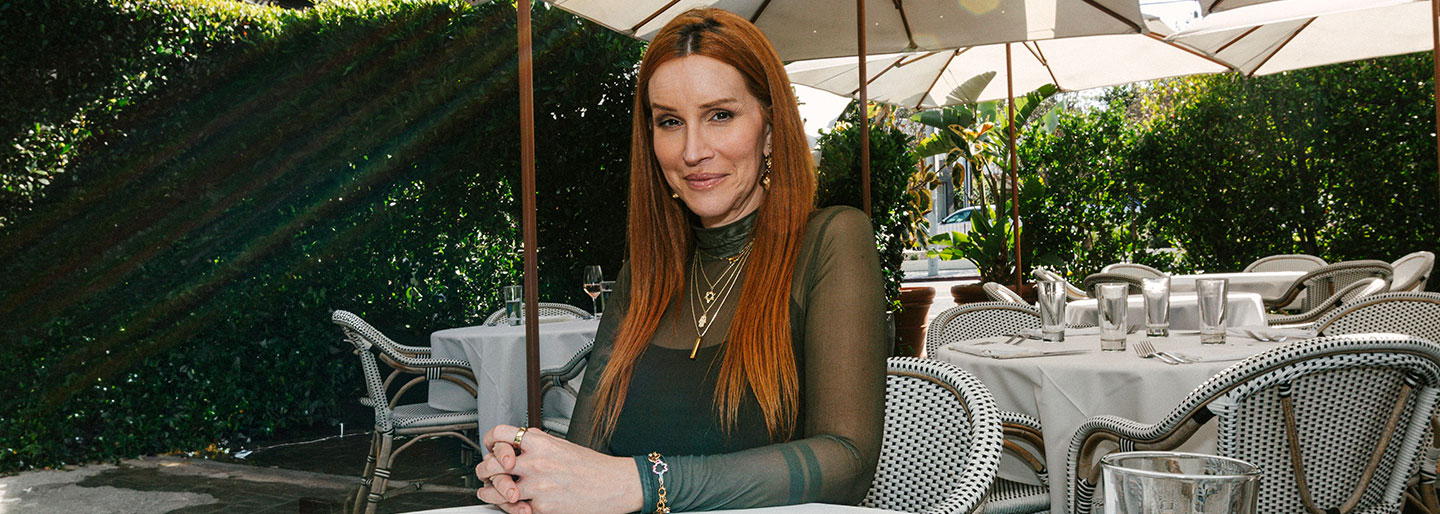
From Transparent to The Boroughs writer-musician Yona Speidel plays on.
One of the key lessons that Yona Speidel took from her first writers’ room, the second season of Transparent, was the importance of collaboration. Of course, as a long-time classical pianist who had worked with orchestras on everything from Bach to Broadway, having an “ear” for the room was as asset that Speidel had long since cultivated.
“It was a very fast learning curve,” Speidel says of that first room more than a decade ago, “but working in a writers’ room is so similar to making music. You have to listen. That’s the number one most important thing. It’s not just about your voice, especially when you’re a staff writer. It’s about serving the creator’s vision and it’s often about inhabiting their voice.”
Having completed 15 writers’ rooms—from Transparent through the recent Netflix supernatural comedy The Boroughs—the writer formerly known as Our Lady J remains as passionate about the art of making TV as she was when her work on Transparent earned her attention as among the first out trans writers to staff in a writers’ room.
Her path to that room began with music. Speidel studied piano as a child, playing both with classical orchestras and with touring Broadway shows. During her career as a performer in New York, Speidel incorporated comedic moments between her songs, creating essentially a cabaret act. As audiences responded to these biographical interludes, Speidel began developing a stand-up act. Ultimately, she moved to Los Angeles where she began connecting with friends who wrote for TV. Speidel began asking them about the craft. A door opened when she met Transparent creator Joey Soloway at the GLAAD Awards.
“I had been on RuPaul’s Drag Race, and I was there on the red carpet with the Drag Race folks,” she recalls. "It was kind of the beginning of the trans moment in Hollywood. Orange is the New Black had just come out and there was a lot of excitement in the air for this new pilot called Transparent.”
By the time she came aboard, the series about an LA family grappling with its family elder becoming a trans woman, was already successful. Soloway later asked Speidel to write a short story, which served as her unofficial audition for the writers’ room. She also received valuable mentoring advice from fellow writer Noah Harpster who took Speidel under his wing, doing a page-by-page breakdown on the newer writer’s first script, pointing out strong areas and places that needed improvement.
Her three seasons on Transparent included two Writers Guild Awards nominations for Comedy Series. She highlights the episode she wrote, Season 3’s “If I were a Bell’s,” which delved into the childhood of Maura Pfefferman, a journey that Speidel said mirrored her own.
“This was the first time I really took something that was very deeply personal and put it out there for the world to see like that,” she says.

It’s scary to believe in yourself and believe that you can contribute more than just the thing that the world wants you to be.
- Yona Speidel
Speidel says the Transparent experience “changed my life for the better forever,” but she also acknowledges that, looking back, she might have made different choices.
“Once the world sees you and sees your trans-ness or gender or whatever it is, that is innate to you and something you can’t remove. It’s hard to get them to see your work,” she says. “So I kind of tokenized myself, and I pigeonholed myself into a place where, at the beginning, a lot of the inquiries that came in were only trans-related. I love trans stories and I love my trans siblings, but there’s also so much more I want to do.”
Her next series, Pose, brought Speidel more acclaim as well as an Emmy nomination for the series finale. Subsequent work on Ryan Murphy-produced series American Horror Story and Doctor Odyssey, gave Speidel her first opportunities to direct. She also wrote an American Horror Story episode that, she boasts “was so grotesque that a reviewer said she threw up watching it. I was very proud of that.”
When she joined The Boroughs as a co-EP, Speidel found herself for the first time on a series that did not touch on issues related to LGBTQ+ identity.
“I’m really proud of that because it’s scary to believe in yourself and believe that you can contribute more than just the thing that the world wants you to be,” Speidel says. “The amount of confidence that I had to build was not easy, but also the amount of meetings I’ve done with executives and the hard work I put in to really be taken seriously as a worker amongst workers, paid off.”
Her time on The Boroughs came with an added bonus, the opportunity for Speidel to flex a new creative muscle, writing a heist-themed episode.
“You have to have a firm grasp on rhythm and pacing for that, and you have to figure out how to get characters out of a very tricky situation,” she says. “I had done a rewrite on a heist film right before that, so I knew all about breaking into banks and how to surpass security. So it was kind of fun to learn all of those things by Googling.”
“I don’t know if the FBI is watching my internet behavior,” she adds. “They probably think I’m a thief.”
To aspiring writers, she offers words of advice that have a musical parallel.
“The advice to get to Carnegie Hall is ‘Practice, practice, practice,’ so my advice to writers is write, write, write,” she says. “Producing is a little harder because it requires other people, so you have to be more of a business person to get things off the ground. But anyone can write. You just have to make time for it. So my first advice is to write, and second is work on time management. There’s nothing scarier than a blank page on your screen and when you have too many distractions, you often never get to doing it.”